The Goddess Section
Ancient Priestesses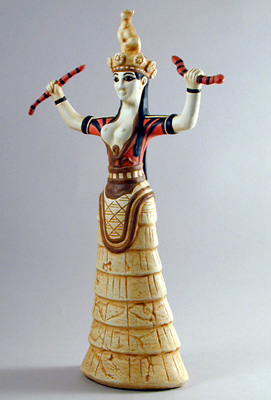
'The priestess in ancient times was part of the community, the Grandmother. She was a nurse and midwife, a healer, giving advice as needed but without being set above or elevated to "priestly" heights. Accompanying their work with song, our foremothers transformed drudgery into rhythmic dance patterns, neutralizing its potentially adverse effects on the human body and psyche. They marked sacred space and time in words valued for their healing power, associated with breath and movement, with the life force itself. For festival occasions or specific ritual purposes, the priestess wore a special costume, jewelry, and headdress, abandoning her personal identity in order to embody a larger power. Her ceremonial garments were then removed and stored until the next occasion According to Marija Gimbutas, "Although these sisterhoods or communities of women were endowed with great power, they seem to have functioned as collective entities, not as autocracies.
Over time, priestesses as keepers and leaders of ritual disappeared from the scene with the rise of a priestly caste (the Levites and Brahmans are examples). The altar, which had been centered on the hearth, was moved to the temple. The communal worship/storehouse/living centers were replaced by the church building. Temples were built as separate edifices to house a distinct institution of priests, where ritual came to be the domain of select individuals on behalf of the community, in place of communal participation. organic rituals became prescribed religion..
Dance as an integral part of women's spiritual practice shared a parallel fate with the priestess. As religions in many parts of the word moved further and further away from communal participation, the priestess led communal nature dances, dances of religious ecstasy, and birth/fertility dances were frowned upon and eventually forbidden. A few religions incorporated the priestess as a sacred dancer into their rites, but these religions made sacred dancers servants of the temple and of it priests.
The momentous split of the artistic form of worship and the devotional setting - a split between the sacred and the profane - was brought about by the social division of priests and worshippers into masters and servants. Devotional dances gradually became commissioned works for the enjoyment of paying or ruling spectators, for provocative entertainment. Dance was transformed from a religious act or ceremonial rite into a work of art intended for observation and subject to judgment by the observer. From these changes arose a culture of dance as theater and entertainment.'
Taken from the chapter 'From Priestess to Performer: The transition' In Iris J. Stewart's book 'Sacred Woman, Sacred Dance'. Published by Inner Tranditions. I personally found this one of the best books I've read on who the priestesses were and are. A must read for anyone studying the path of the Goddess.
* * * * * * *
The Oxford English Dictionary states that from 1540 to 1677 the word prostitute was used in the sense of "to offer with complete devotion or self-negation" or simply as a synonym for "to devote." By the 1700s, prostitute denoted "given over or devoted to something evil." It began to be used figuratively to mean "debased" or "debasing, corrupt." By mid-century, prostitute was well established in the sexual sense we know today.
* * * * * * *
 The
priestess is the lens focusing for the others the higher life energies, the
sustaining energies that constitute and define earthly existence. She acts
as the transmitting agent of divine emanations. Her dance is a system of
movements, gestures, prayers, and songs in veneration of the invisible forces of
life.
The
priestess is the lens focusing for the others the higher life energies, the
sustaining energies that constitute and define earthly existence. She acts
as the transmitting agent of divine emanations. Her dance is a system of
movements, gestures, prayers, and songs in veneration of the invisible forces of
life.
The function of the priestess is to facilitate the group's and the individual's
process and to teach all how to be receptive. To be receptive means to be
open to receiving and considering. The group is the focus. Her dance
is concerned not with the personal but with the transpersonal, or rather with
connecting the personal and the transpersonal, the eternal.
The creative forces that pour through the priestess vitalize the lives of those
in the group. That ability to transmute divine events into spatial
configurations is her power and her service.
* * * * * * *
Here are sites to read about the priestesses from ancient
past. A fascinating discovery into the worship of the divine through the
Priestesses. The initiatresses, wise ones and healers.
Uplifting and Riding the dance of the Divine.
Buddhism viewed goddesses as "Lightning conductors" that diverted human
energy currents straight to the World Soul.
Sappho, 600 B.C.., spoke of how it was:
When the full moon rose
Women took their place around the altar...
(... they were dancing) as
Cretan women danced
beside a lovely altar
Their graceful feet treading
down the smooth soft bloom of the grass.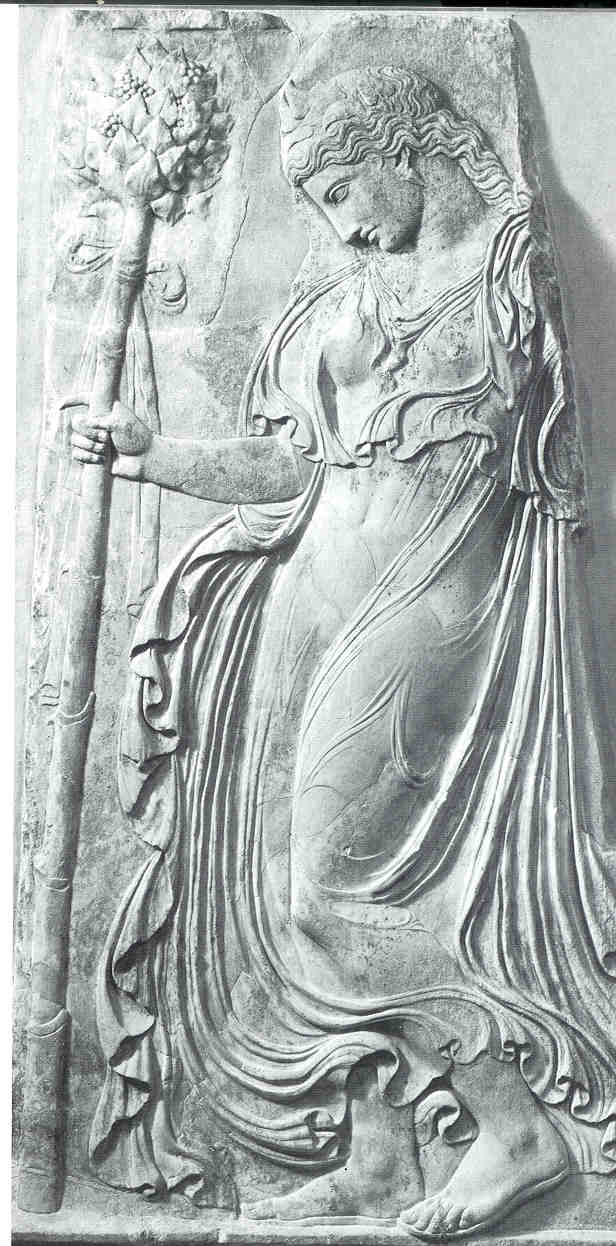
-
Aphrodite's daughters is an excellent read about the interest in a women's sexual journeys based on her belief that sex is an inherently sacred and soulful force. Emphasizing the sacred function of the ancient sexual priestesses.
-
Middle Eastern Dance The emergence of the new sacred temple Priestess.
-
Transsexual Priestesses, Sexuality and the Goddess
-
IONA - Island of the Druids
-
Her Colleagues In Athens, women were not allowed to participate in public life. They were confined to their homes to take care of their husbands and children. However, the one way that Athenian women could contribute to public life themselves was to become a priestess.
-
Embodiment of the Goddess the sexual healers, priestesses of the temple of love, The Sex Goddesses.
-
Out of the Earth Goddess a touch on the past
-
Goddess of the Sun In 'O Mother Sun: A New View of the Cosmic Feminine.'
The Birthing Woman as Original Shaman-Goddess
Virgin Priestesses
- The Goddess Bridgit - the Goddess Brigit had always kept a shrine at Kildare, Ireland, with a Perpetual Flame tended by nineteen Virgin Priestesses called Daughters of the Flame.
- The Virgin Birth and Childhood "Holy Virgin" was the title of harlot-priestesses of Ishtar (and) Asherah. The title didn't mean physical virginity; it meant simply "unmarried." The function of such "holy virgins" was to dispense the Mother's grace through sexual worship; to heal; to prophesy; to perform sacred dances; to wail for the dead; and to become Brides of God."
- Hestia One of three Roman Virgin Goddesses. Her temples were circular and served by virgin priestesses who dedicated their lives to her.
- Vestual Virgins The priestesses of Vesta. Their sacred duty is to tend the eternal fire of Vesta in her temple
The picture of the Ancient priestess is from Sue Blondell
- This is From Spiral Goddess.com on their altar page to Inanna/Ishtar
Enheduanna
Below are the words of a high
priestess, named Enheduanna (en-hey'-du-ana),
who worshipped the Goddess, Inanna.

Enheduanna, is the first known
author in
the history of writing, she was a high priestess who lived 4,000 years ago in
the city of Ur, (now southern Iraq).
The passage below is a new translation of Enheduanna's poetry from the recently
published book "Inanna, Lady of the Largest Heart" by Betty DeShong Meador,
(University of Texas Press, Austin).
Inanna, Lady of the Largest Heart
at Amazon.com
"Queen of all given powers/unveiled clear light/
unfailing woman wearing brilliance/cherished in heaven and earth/
chosen, sanctified in heaven/you/grand in your adornments/
crowned with your beloved goodness/rightfully you are High Priestess/
your hands seize the seven fixed powers/my queen of fundamental forces/
guardian of essential cosmic sources/you lift up the elements/
bind them to your hands/gather in powers/press them to your breast/
vicious dragon you spew/venom poisons the land/like the storm god you howl/
grain wilts on the ground/swollen flood rushing down the mountain/
you are Inanna/supreme in heaven and earth..."
This page last updated: 03/01/2018